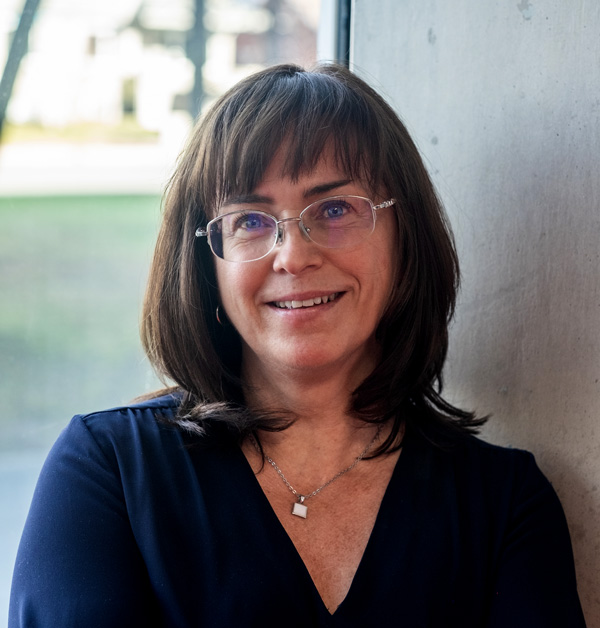
Isabel Côté

Professor in the department of social work at Université du Québec en Outaouais
819-595-3900 poste 2334

Isabel Côté is a professor in the Department of Social Work at Université du Québec en Outaouais. Her research aims to develop a comprehensive understanding of third-party reproduction by combining the perspectives of all the people involved: parents, gamete donors and surrogates, extended families and individuals conceived through gamete donation or surrogacy. Anchored in innovative qualitative methodologies, her work draws from the sociology of the family, kinship anthropology and feminist and LGBTQ+ studies to take a fresh look at contemporary family experiences that remain marginalized today. The agency of children is fully integrated in the construction of knowledge about families created thanks to third-party reproduction. Her research results are mobilized in community and institutional networks through research partnerships with organizations such as the Centre ESPER and the Quebec LGBT+ Family Coalition. Côté is a member of the Comité central d’éthique clinique en procréation médicalement assistée (Quebec central committee on the clinical ethics of medically assisted reproduction). She contributes to social and policy debates, while also promoting the development of tools to better support the well-being of the people involved in third-party reproduction. She is a member of the Partenariat Familles en mouvance (an interdisciplinary partnership for research on families) and of the Réseau québécois en études féministes (RéQEF) (Quebec network for feminist studies). In 2025, she entered the Cercle d’excellence de l’Université du Québec, and the UNIE-LGBTQ research partnership, which she co-directed, received the Academic Prize at the Emergence Gala.

Publications

  • Resistance Strategies and Identity Reappropriation of LGBTQ+ Migrants in Québec

    Journal of International Migration and Integration (2023)
  • ‘Once you open that Pandora’s Box, you cannot close it’: a qualitative study on family relationships following insemination fraud

    Reproductive BioMedicine Online (2023)
  • Tisser une trame relationnelle autour de l’enfant : les affiliations familiales en contexte de gestation pour autrui et de don d’ovules

    Dialogue (2023)
  • De la nécessité de bien accompagner les personnes et les familles concernées par la procréation assistée à l’aide d’un tiers

    Mémoire présenté dans le cadre des consultations particulières et des auditions publiques pour le projet de loi no 12 (2023)
  • Les expériences du droit et de la justice des parents LGBTQ+ séparés

    La séparation parentale et la recomposition familiale dans la société québécoise : les premiers moments, p. 387-406, Presses de l’Université Laval (2023)
  • When Facebook plays matchmaker: Interactions within an online community dedicated to surrogacy and egg donation

    Family Relations (2023)

Projects

  • Narratives within families with children conceived via sperm donation

  • STORIES: Self, Transmission, Origins, Representations, and Identity among Donor-Conceived Teenagers and their Families

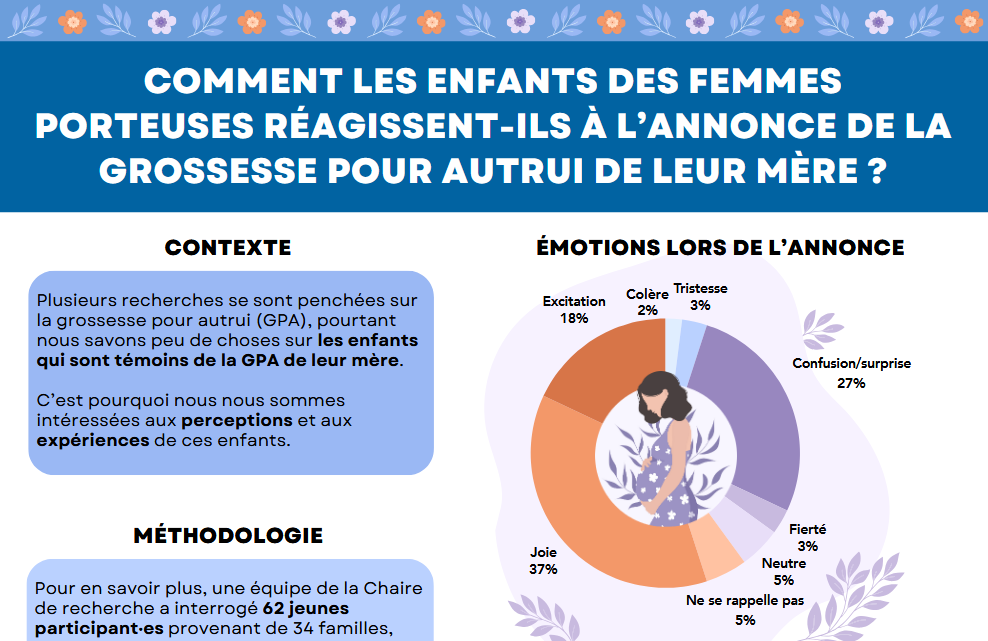
  • My Mother’s Surrogacy

  • Surrogates’ Voices

Related contents

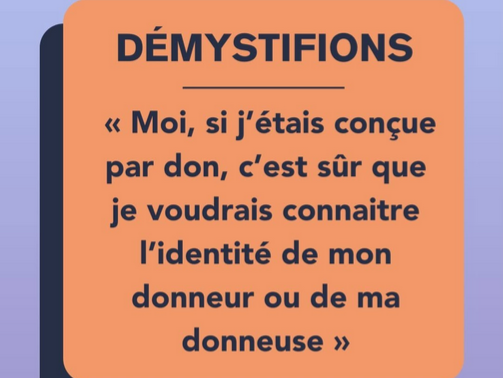
  • 60 sec to debunk the desire to know or not to know the identity of the donor

    Let’s debunk in 60 sec preconceived ideas about third-party reproduction (2024)
  • Introducing the Grandparents project

    Spotlight on our research projects (2024)
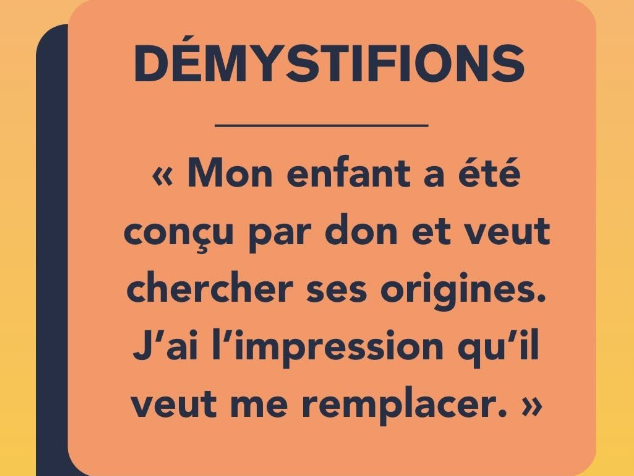
  • 60 sec to explain the search for one’s genetic origins

    Let’s debunk in 60 sec preconceived ideas about third-party reproduction (2024)
  • Introducing the Adoption project

    Spotlight on our research projects (2024)
  • Summer Institute on Assisted Reproduction

    The Summer Institute on Assisted Reproduction (June 3-5, 2024) is offering advanced training on contemporary issues in assisted reproductive technologies (ART). This multi-day event is aimed at professionals who work with people involved in ART, as well as researchers and students.
  • 15 youth discuss fertility preservation in words and images

    PREFER Research Team (2024)