Isabel Côté

Professor in the department of social work at Université du Québec en Outaouais
819-595-3900 poste 2334

Isabel Côté is a professor in the Department of Social Work at Université du Québec en Outaouais. Her research aims to develop a comprehensive understanding of third-party reproduction by combining the perspectives of all the people involved: parents, gamete donors and surrogates, extended families and individuals conceived through gamete donation or surrogacy. Anchored in innovative qualitative methodologies, her work draws from the sociology of the family, kinship anthropology and feminist and LGBTQ+ studies to take a fresh look at contemporary family experiences that remain marginalized today. The agency of children is fully integrated in the construction of knowledge about families created thanks to third-party reproduction. Her research results are mobilized in community and institutional networks through research partnerships with organizations such as the Centre ESPER and the Quebec LGBT+ Family Coalition. Côté is a member of the Comité central d’éthique clinique en procréation médicalement assistée (Quebec central committee on the clinical ethics of medically assisted reproduction). She contributes to social and policy debates, while also promoting the development of tools to better support the well-being of the people involved in third-party reproduction. She is a member of the Partenariat Familles en mouvance (an interdisciplinary partnership for research on families) and of the Réseau québécois en études féministes (RéQEF) (Quebec network for feminist studies). In 2025, she entered the Cercle d’excellence de l’Université du Québec, and the UNIE-LGBTQ research partnership, which she co-directed, received the Academic Prize at the Emergence Gala.

Publications

  • “It’s someone who means a lot to me, and who means even more to mom”: Children’s views on the romantic partners of their polyamorous parents

    Journal of Social and Personal Relationships (2024)
  • L’accès aux services de fertilité pour les femmes lesbiennes, bisexuelles ou pansexuelles et les personnes queer, trans ou non-binaires : une revue rapide des écrits scientifiques

    Science infirmière et pratiques en santé (2024)
  • Pourquoi devrais-je adopter mon propre enfant ? Le recours à l’adoption par consentement spécial pour établir la filiation d’un enfant né d’une grossesse pour autrui au Québec

    Enfances, Familles, Générations (2024)
  • Les apprentissage comme preuves de résilience chez les jeunes Québécois·e·s en contexte de pandémie

    Canadian Social Work Review / Revue canadienne de service social (2024)
  • Commentaires sur les règlements en lien avec la réalisation de projets parentaux à l’aide d’autrui

    Soumission au Ministère de la Justice du Québec (2023)
  • Les « plaisanteries » des collègues de travail : terrain d’oppression et de résistance à la violence pour les personnes LGBTQ+

    Genre, sexualité & société (2023)

Projects

  • Project in recruitment process

    Intergenerational Ties Through the Lens of Third-Party Reproduction

  • Contact: the experiences of gamete donors contacted by their donor offspring

  • Drifts in Donor Conception and Their Impacts on Life Trajectories

  • ACCESS to reproduction for LBP women and QTNB people

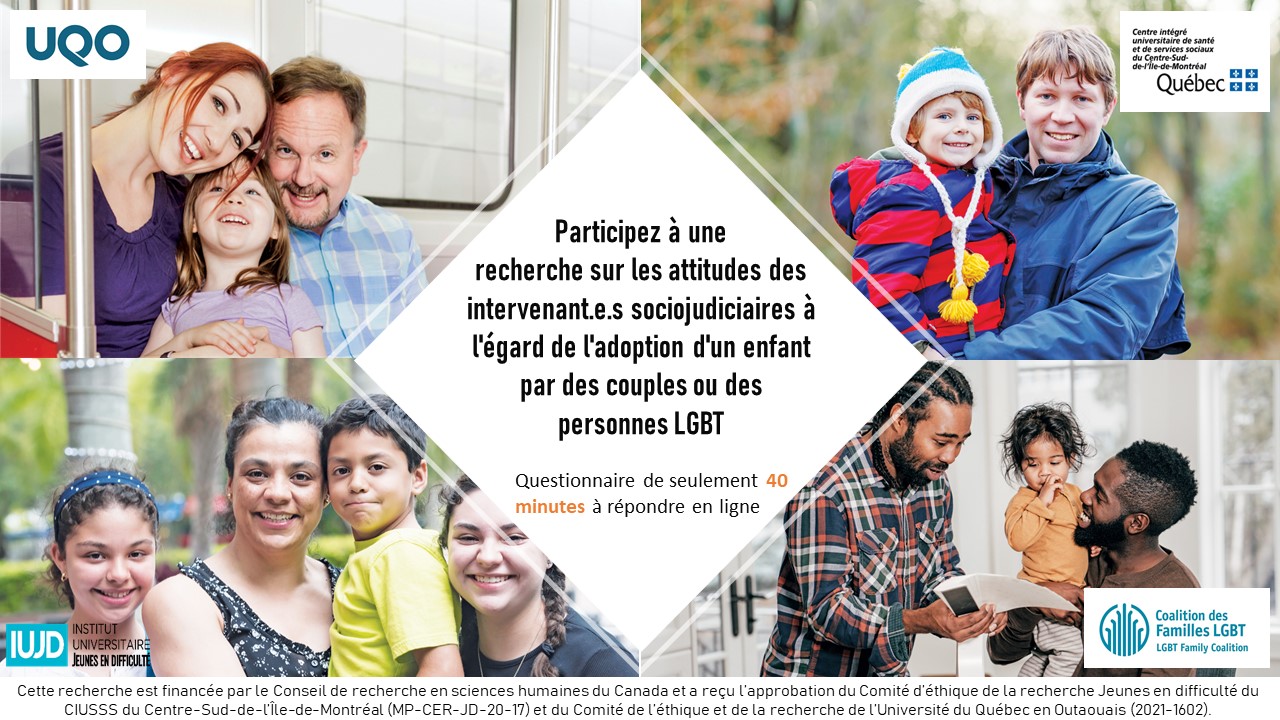
  • Adoption Project

  • PREFER Study

Related contents

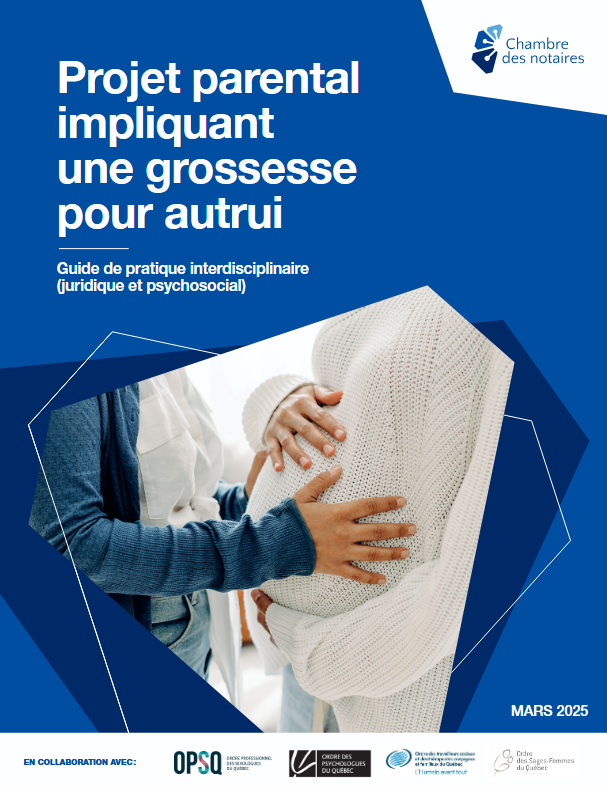
  • Parental projects involving surrogacy: an interdisciplinary (legal and psychosocial) practice guide

    Chambre des notaires du Québec (2025)
  • Multiple parentage and the search for ancestry, in the shadow of family law reform: conference booklet

    Observatoire des réalités familiales du Québec (2025)
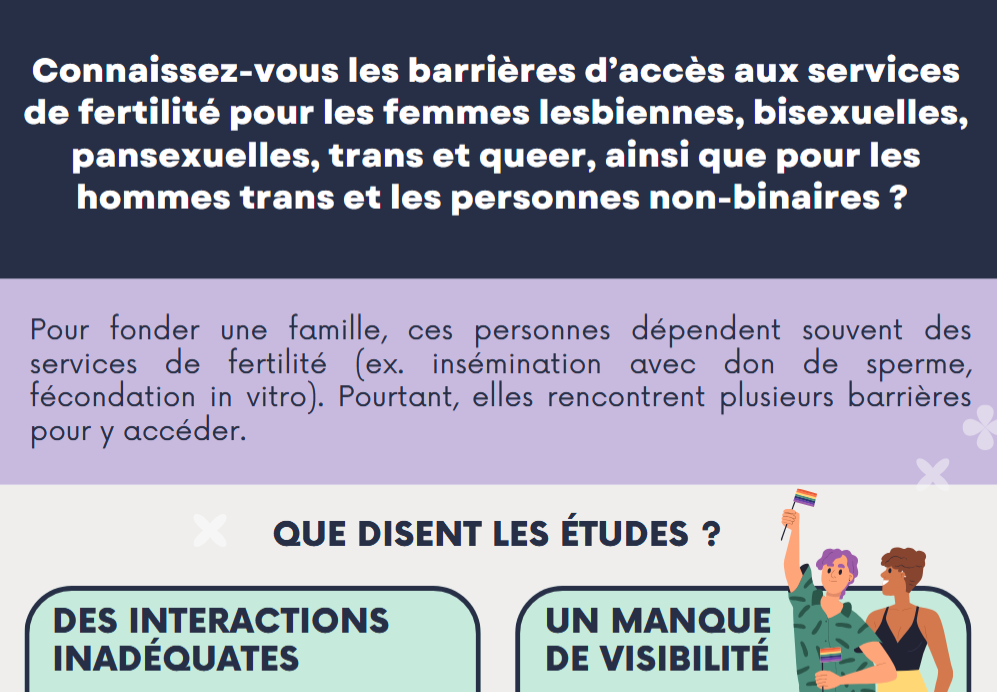
  • Do you know about the barriers affecting access to fertility services for lesbian, bisexual, pansexual, trans and queer women, trans men and nonbinary people?

    ACCESS Research Team & LGBT+ Family Coalition (2024)
  • How is adoption by special consent perceived by individuals involved in a surrogacy agreement?

    COMMUNICATION Research Team (2024) – Infographic from a study by Kévin Lavoie, Isabel Côté and Sophie Doucet
  • How do children see their polyamorous parents’ romantic partners?

    COMMUNICATION Research Team (2024) – Infographic from a study by Milaine Alarie, Morag Bosom and Isabel Côté
  • Comic series of the CONTACT Project

    CONTACT Research Team (2024)