What do medically assisted reproduction journeys look like for lesbian, bisexual, pansexual, queer, nonbinary and trans people? What obstacles do they face? How can we better tailor our services to their needs? How can psychosocial appointments in fertility clinics help queer couples?
The Another way to conceive video series helps answer those questions. This four part series features couples who are seeking or have gone through medically assisted reproduction to start a family, as well as Lanzz, services coordinator at the Quebec LGBT+ Family Coalition.
This series is part of the Access project. Funded by the Secrétariat à la condition féminine, this research project documented the experiences of lesbian, bisexual and pansexual women, as well as queerr, trans and nonbinary people in Quebec who want to start a family.
1. Journeys and stories
“When it comes to medically assisted reproduction, every journey is different, each story is unique.” — Gabrielle, future parent
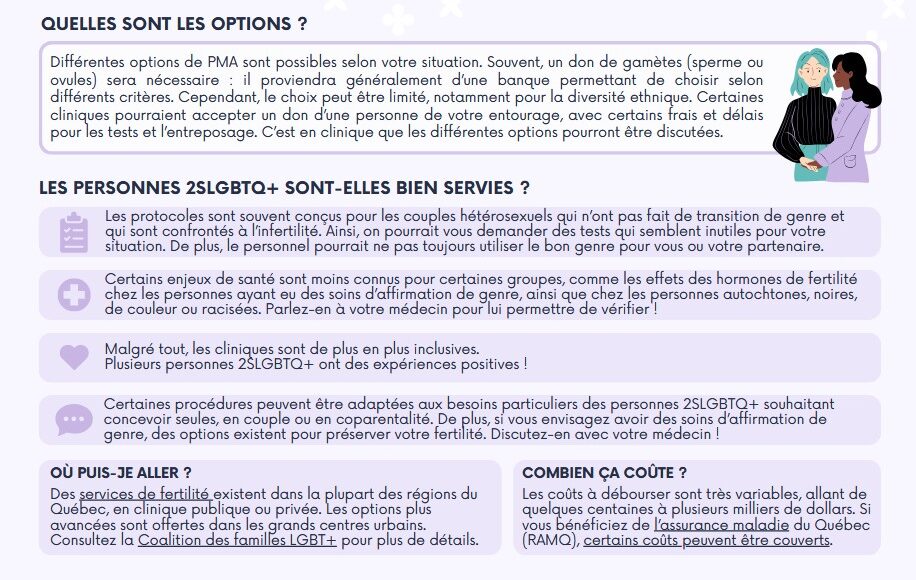
Choosing between an open-identity or anonymous donor, finding a non-white donor, choosing who will carry the baby, educating medical personnel about 2SLGBTQ+ experiences… Here is an overview of medically assisted reproduction journeys!
2. Undoing stereotypes and looking further
“The energy [at the clinic] was a bit like : ‘you’re here for help and support, but you’re not a part of this process or parental project.’” — Jodie-Anne, parent who did not carry the child
Being misgendered by medical staff, not being recognized as a parent of the future child, filling forms that do not reflect 2SLGBTQ+ experiences… This video presents an overview of the obstacles parents face.
Further reading
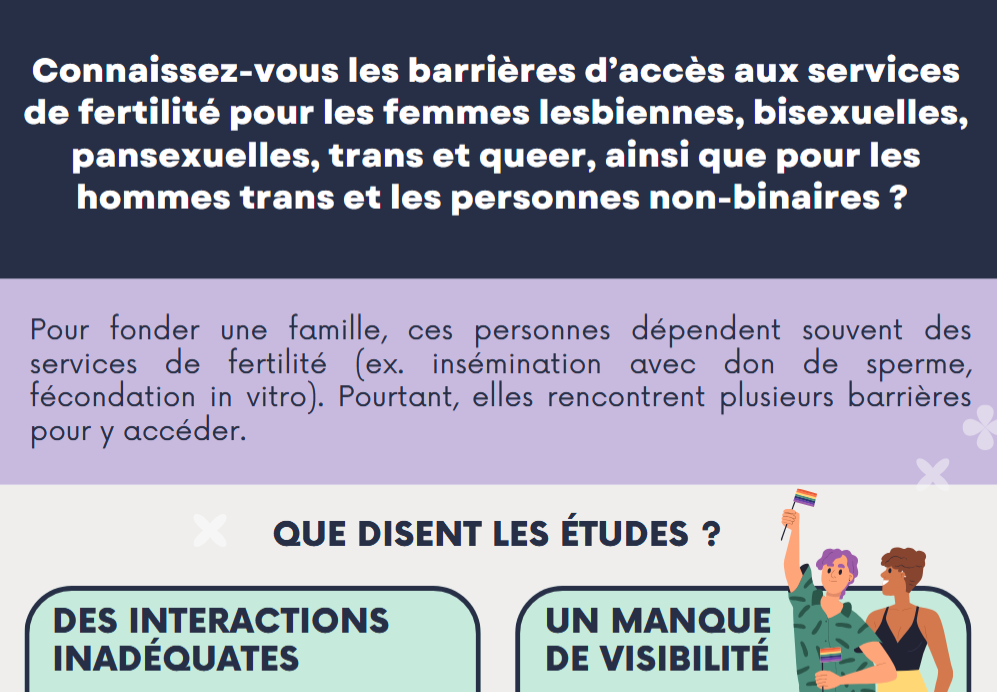
The Access research team created a fact sheet about barriers affecting access to fertility services for lesbian, bisexual, pansexual, trans and queer women, as well as trans men and nonbinary people.
Click the link below to download the fact sheet (in French)
Infographie Barrières d’accès aux services
3. Experiencing the process with confidence
“It’s one thing to know that LGBT individuals exist and to want to welcome them. But it’s not the same thing as being informed about their experiences.”
— Lanzz, service coordinator that the Quebec LGBT+ Family Coalition
Asking questions, expressing one’s needs and expectations for the medically assisted reproduction process, choosing the words we want to use to talk about our family, finding information on the Quebec LGBT+ Family Coalition website… Here is an overview of the strategies that helped couples go through the process!
4. Psychosocial appointments
“These psychological appointments, the name sounds serious, but there’s no judgement. It’s not about assessing your ability to be a parent.”
— Lanzz, service coordinator that the Quebec LGBT+ Family Coalition
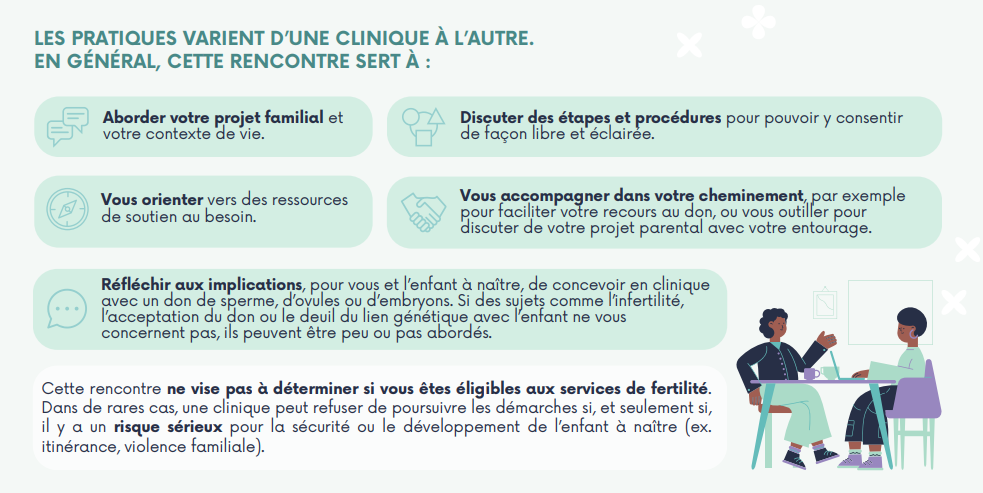
Thinking about the impact of donor type, about the intention to disclose donor conception, and about the grief that may come with a lack of genetic bond with one’s children… This video looks at topics that couple can discuss during sessions.
Further reading
The Access research team created a fact sheet to learn more about psychosocial appointments in fertility clinics.
Click the link below to download the fact sheet (in French)
Infographie Rencontre psychosociale
The Another way to conceive video series was co-produced by the LGBT+ Family Coalition, the Canada Research Chair in Third-Party Reproduction and Family Ties, and the Jeunes, familles et réponses sociales (JEFAR) Research Center. The videos were directed by Madeleine Cantin (Productions J).