The rights of LGBTQ people have advanced considerably in recent decades, as evidenced by their increasing inclusion in social, legal and political discourse. Canada and Quebec are well known for having pioneered legislative advances that have brought greater legal equality to LGBTQ communities. In Quebec, families with LGBTQ parents have particularly benefited from these legislative advances, as they have had the same rights and responsibilities as heteroparental families since 2002. The fact that it is possible for them to undertake a parental project in which both members of the couple are legally recognized as parents has resulted in a significant increase in the number of families with same-sex parents in Quebec, in Canada, and elsewhere in the world where such legislation exists. Among other ways to become parents, local adoption is one way in which a significant number of LGBTQ individuals and couples turn to. Despite legal progress, heterosexism, cissexism and heteronormativity can still affect how professionals evaluate adoption candidates, which can discourage LGBTQ couples from considering adoption as a viable path toward building a family.
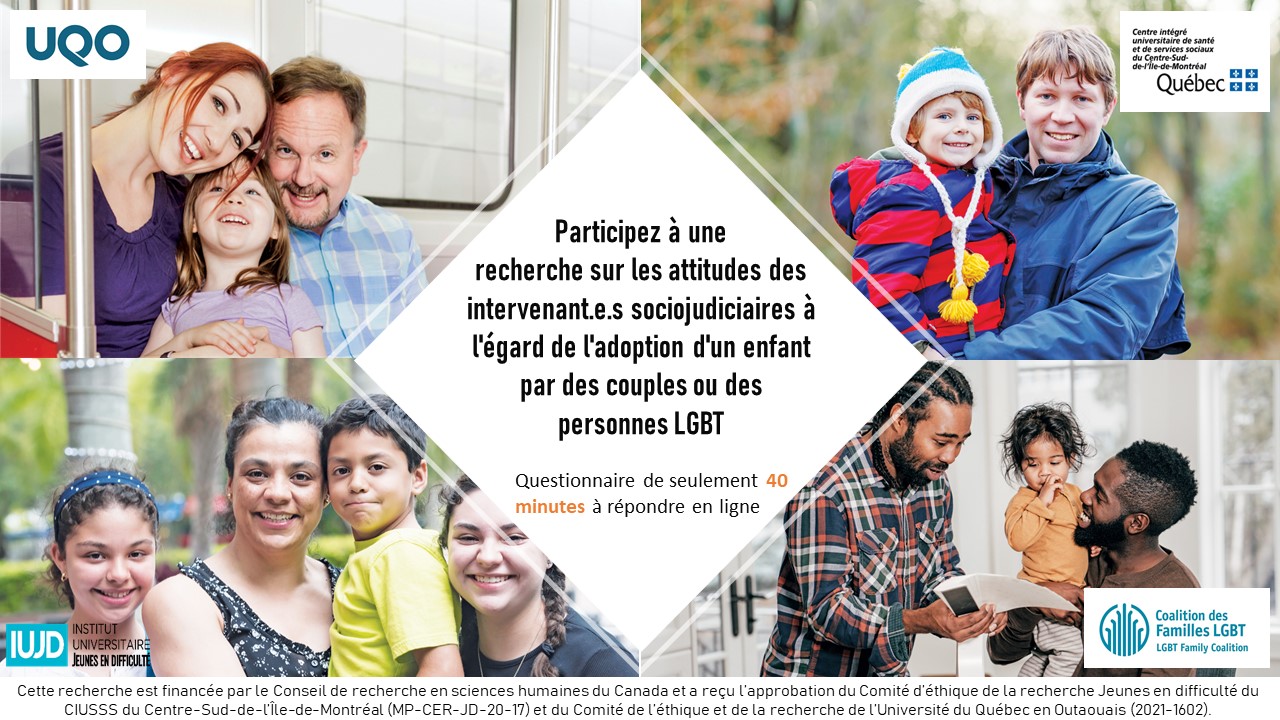
Conducted in collaboration with the LGBT+ Family Coalition, the Adoption project aimed to describe, understand and compare the attitudes and representations of various professional groups (in the fields of social work, psychology and law) regarding the adoption of a child by an LGBTQ person or couple. Our aim was to identify the best predictors of positive attitudes towards adoption by an LGBTQ person or couple. Research results helped improve training for social and legal professionals who work with LGBTQ families.